
A pet parent often knows when something is different before they know how to describe it. The pet may pause near the bowl, drink less, walk away from a normal meal, or rest in a place they usually ignore. Those observations matter because they give a veterinarian a clearer starting point.
Evidence before a vet visit does not mean trying to diagnose the problem at home. It means organizing what you can see: what changed, when it started, how often it happened, and whether there is a short clip that shows the behavior.
Start with the pet's own normal
The most useful comparison is not a general rule about what pets should do. It is your pet's ordinary routine. Some pets eat immediately. Some sniff, leave, and return later. Some drink after every meal. Others only visit the water bowl at specific times.
When something feels off, write the change as a comparison to that normal pattern:
- "She usually finishes breakfast, but today she sniffed the bowl and walked away."
- "He drank water twice this morning, but did not touch food."
- "She approached the bowl, lowered her head, then backed away."
- "He stayed near the food but seemed slower than usual."
These details are more useful than a broad note like "acting strange" because they show the exact behavior that changed.
Watch the feeding area as a daily checkpoint
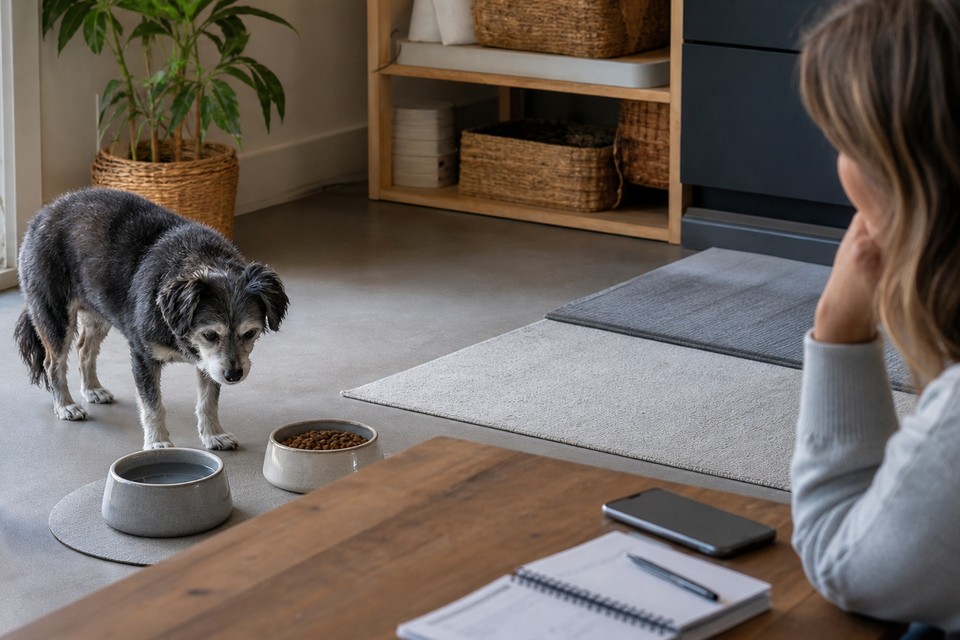
Food and water routines repeat every day. That makes the feeding area a practical place to notice changes in approach, hesitation, timing, posture, and interest.
PETVOX focuses on this area because the repeated routine creates context. A camera cannot tell you whether a pet is sick. It can help preserve moments that are easy to miss or hard to remember later.
Useful observations include:
- whether the pet approached food and water at the usual time,
- whether they ate, only sniffed, or walked away,
- whether posture looked different around the bowl,
- whether another pet interrupted or blocked access,
- whether the same change happened once or repeated across meals.
Capture short clips instead of reviewing hours of video
A short clip can be more helpful than a long recording. The best clip shows the exact moment you are trying to explain: hesitation at the bowl, walking away from food, vomiting, guarding, posture change, or a repeated interruption.
Add one or two notes with the clip: the date, the approximate time, what was normal before, and whether anything else changed. This gives the veterinarian context without asking them to interpret an entire day of footage.
Write down the timeline before a vet call
Before you call or visit a veterinarian, a simple timeline can make the conversation more efficient.
Helpful notes include:
- when the change started,
- which routine changed: food, water, bathroom, posture, rest, or movement,
- how many times it happened,
- whether the pet returned to normal later,
- whether vomiting, diarrhea, coughing, injury, weakness, or breathing trouble is present,
- whether you have a short clip that shows the behavior.
If you see urgent signs such as trouble breathing, collapse, severe bleeding, poisoning concern, repeated vomiting, or extreme weakness, contact an emergency veterinarian promptly. Do not wait to collect more evidence.
Keep the boundary clear: evidence is not diagnosis
PETVOX is designed to help pet parents organize behavior evidence around daily routines. It does not diagnose disease, detect pain, replace a veterinary exam, or decide whether a pet needs care.
The value is practical: clearer observations, shorter evidence clips, and better context for the conversation you already planned to have with a veterinarian.
FAQ
What should I observe first when my pet seems off?
Start with appetite, water interest, posture, litter box or bathroom changes, and whether the pet is following their normal routine.
Can a pet camera tell me whether my pet is sick?
No. A camera can help capture behavior evidence, but it cannot diagnose illness or replace a veterinarian.
Why does PETVOX focus on the feeding area?
Meals and water visits are repeated daily routines, which makes that area a practical checkpoint for changes in approach, hesitation, and timing.
What kind of video is useful before a vet visit?
Short clips that show the exact moment of hesitation, walking away, guarding, vomiting, or posture change are more useful than long recordings without context.
Related guides
- Why we are building PETVOX
- What does it mean when a pet is not acting like themselves?
- Pet camera that tracks health changes: what should it show?
- Multi-pet feeding routines: how to know who actually ate