
Start with the pet's own normal
A behavior change is easier to understand when it is compared with your pet's usual routine. Start with the details you already know: how quickly they approach the bowl, whether they drink at the same time, where they usually rest after eating, and how they act around other pets in the home.
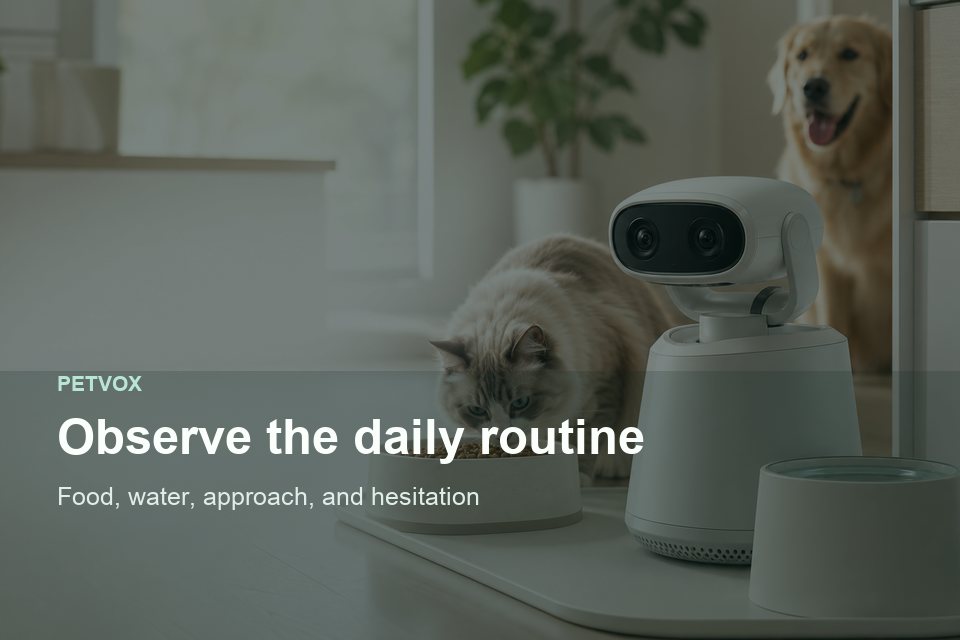
Watch the feeding area as a daily routine
Meals and water visits are repeated checkpoints. That repetition makes the feeding area a practical place to notice hesitation, walking up and leaving, guarding, interruptions, posture changes, and timing shifts that are otherwise easy to forget later.
- Food interest: ate normally, ate less, approached and left, or refused food.
- Water pattern: drinking less, drinking more, or visiting the bowl more often.
- Posture: hesitation, lowered head, stiffness, crouching, or repeated pauses.
- Energy and location: hiding, resting somewhere unusual, pacing, or less interaction.
- Other signs: vomiting, stool changes, coughing, unusual vocalizing, or visible discomfort.
- Multi-pet context: whether another pet interrupted, guarded, or changed the routine.
Capture short clips instead of reviewing hours of video
A short video does not diagnose a problem, but it can preserve the exact behavior you noticed. A clip of hesitation, walking away, vomiting, guarding, or an unusual posture can make a call or visit more specific than trying to remember details while worried.

Write down the timeline before a vet call
Write down when the change started, whether it repeated, and what happened around the same time. Note appetite, water, vomiting, stool changes, unusual vocalizing, or obvious discomfort. Clear notes plus short clips can give a veterinarian better context faster.

Keep the boundary clear: evidence is not diagnosis
PETVOX is focused on helping families notice routine changes and preserve useful context. It is not a diagnostic device and it should never replace clinical judgment. If the change is repeated, paired with vomiting or diarrhea, linked to obvious pain, involves breathing difficulty, or simply makes you uneasy, contact a veterinarian or emergency clinic promptly.
FAQ
What should I observe first when my pet seems off?
Start with appetite, water interest, posture, litter box or bathroom changes, and whether the pet is following their normal routine.
Can a pet camera tell me whether my pet is sick?
No. A camera can help capture behavior evidence, but it cannot diagnose illness or replace a veterinarian.
Why does PETVOX focus on the feeding area?
Meals and water visits are repeated daily routines, which makes that area a practical checkpoint for changes in approach, hesitation, and timing.
What kind of video is useful before a vet visit?
Short clips that show the exact moment of hesitation, walking away, guarding, vomiting, or posture change are more useful than long recordings without context.
Related guides
- Why we are building PETVOX
- Pet camera that tracks health changes: what should it show?
- How to know which pet ate, avoided, or interrupted?